- Khrieneino Tsukru
- December 30, 2025
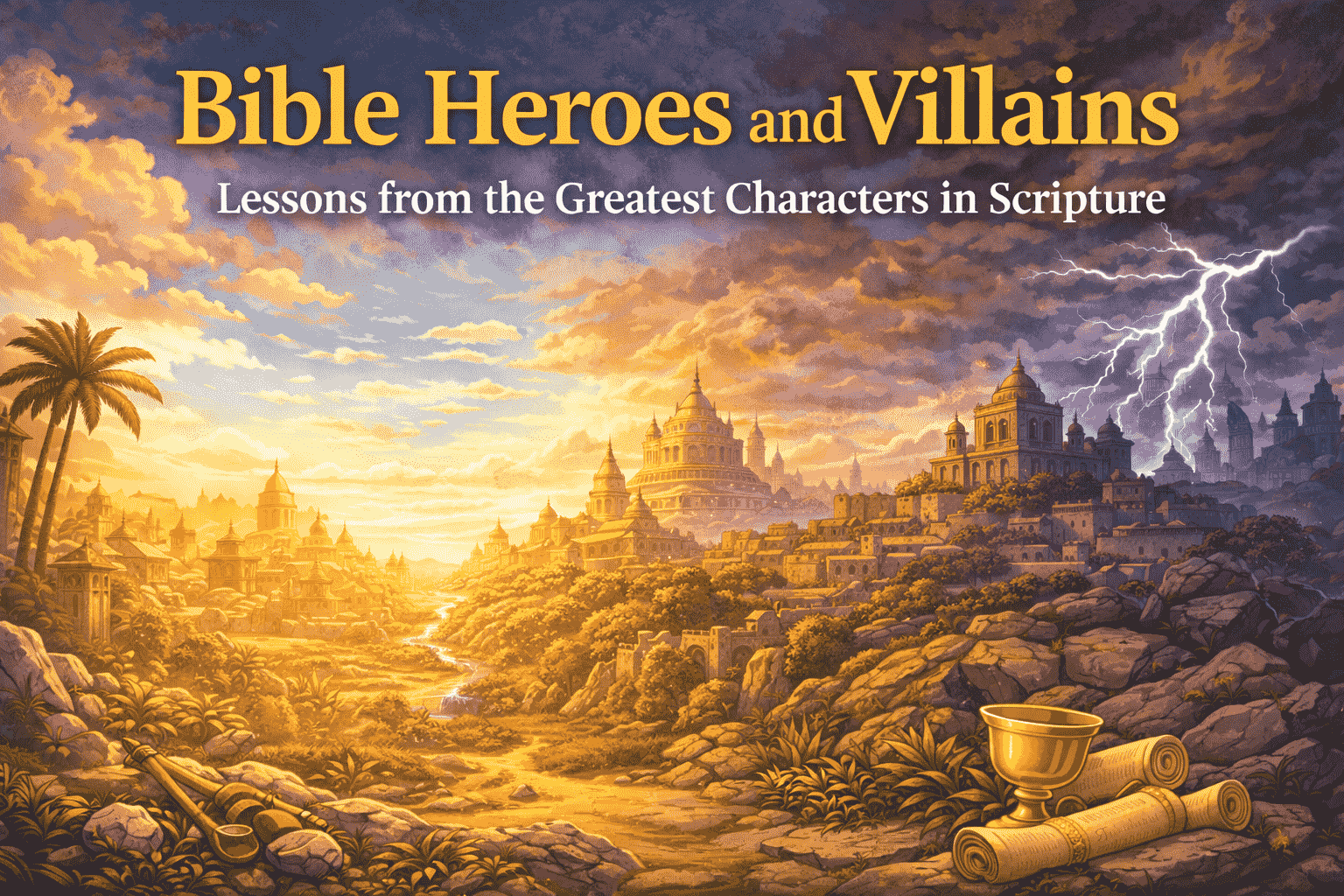
Bible Heroes and Villains: Lessons from the Greatest Characters in Scripture


The Bible is filled with powerful stories of courage, faith, failure, repentance, and redemption. From fearless leaders to cautionary figures, Scripture presents real human characters who made choices that shaped history. Exploring Bible heroes and villains helps readers understand the contrast between faithfulness and disobedience, obedience and rebellion, humility and pride.
Rather than portraying perfect individuals, the Bible offers honest character studies that teach timeless moral and spiritual lessons. This is why the topic of Bible heroes and villains remains central to Bible study, quizzes, Sunday school lessons, and family discussions.
Who Are Bible Heroes and Villains?
Bible heroes and villains are individuals whose lives illustrate the consequences of their choices. Heroes are not flawless people; they are those who trusted God, repented when they failed, and ultimately aligned themselves with His purposes. Villains, on the other hand, are characters who resisted God’s will, acted in pride or cruelty, or led others astray.
Studying heroes and villains in the Bible helps readers understand:
-
How faith shapes character
-
How sin affects decisions and outcomes
-
Why repentance and humility matter
-
How God works through imperfect people
Famous Bible Heroes and What We Learn from Them
David – Faith and Repentance
David is one of the most well-known Bible heroes. Though he made serious mistakes, his heart of repentance set him apart. His life teaches that God values humility and a willingness to turn back when we fail.
Moses – Leadership and Obedience
Moses led the Israelites out of slavery, demonstrating courage and obedience despite personal doubts. His story shows how God empowers those who trust Him, even when they feel inadequate.
Esther – Courage and Purpose
Esther risked her life to save her people. Her story highlights bravery, wisdom, and God’s unseen guidance during moments of great risk.
These heroes remind us that faith, obedience, and courage are cultivated through trust in God—not perfection.
Bible Villains and the Warnings They Provide
Pharaoh – Pride and Resistance
Pharaoh’s hardened heart stands as a warning against pride and stubbornness. His refusal to listen led to destruction and loss.
Judas Iscariot – Betrayal and Regret
Judas serves as one of the most tragic villains in Scripture. His story warns against hypocrisy, greed, and choices made without repentance.
King Saul – Disobedience and Fear
Though chosen by God, Saul’s repeated disobedience and fear of people led to his downfall. His life teaches the cost of ignoring God’s instructions.
Bible villains are not included merely to condemn—but to caution and instruct.
Heroes and Villains in the Bible: Not Always Black and White
One unique aspect of Bible heroes and villains is that many characters cannot be easily classified. Some heroes failed dramatically, while some villains experienced moments of remorse.
This complexity teaches important truths:
-
God looks at the heart, not just actions
-
Redemption is always possible through repentance
-
One bad choice does not define a lifetime
-
Consistent obedience matters more than isolated success
This makes Bible heroes and villains especially powerful for character study and reflection.
Bible Heroes and Villains for Kids and Families
Teaching Bible heroes and villains for kids is an effective way to introduce moral lessons. Stories become more engaging when children understand choices and consequences.
Family-friendly activities include:
-
Bible heroes and villains trivia quizzes
-
Story-based discussions
-
Role-playing activities
-
Sunday school lesson plans
These methods help children grasp values like honesty, faith, courage, and obedience in a memorable way.
Using Bible Heroes and Villains in Bible Study and Church
Churches and study groups often use Bible heroes and villains Bible study formats to encourage discussion and self-reflection. Comparing characters allows learners to examine their own attitudes, motivations, and decisions.
Popular uses include:
-
Small group discussions
-
Sermon illustrations
-
Youth group activities
-
Church quiz nights
This approach makes Scripture practical and relatable rather than abstract.

Bible Heroes and Villains Quiz: Learning Through Engagement
A Bible heroes and villains quiz is one of the most effective learning tools. Quizzes encourage recall, spark curiosity, and invite discussion when answers are unexpected.
Benefits of quiz-based learning:
-
Improves Scripture memory
-
Encourages group participation
-
Reinforces moral lessons
-
Makes Bible study enjoyable
This is why Bible trivia and quizzes are increasingly used in classrooms, apps, and online learning platforms.
Moral Lessons from Bible Heroes and Villains
The stories of Bible heroes and villains teach enduring lessons:
-
Faith leads to strength
-
Pride leads to downfall
-
Obedience brings blessing
-
Repentance restores relationship with God
These lessons remain relevant across cultures, ages, and generations.
Final Thoughts on Bible Heroes and Villains
Studying Bible heroes and villains is more than learning names and stories—it is about understanding human nature and God’s grace. Scripture shows that while people may fail, God’s purpose continues, offering redemption to those who turn back to Him.
Whether used in Bible study, family discussions, or quizzes, the contrast between heroes and villains helps readers grow in wisdom, faith, and discernment.

Khrieneino Tsukru is a passionate Christian writer from the beautiful hills of Nagaland. With a heart rooted in faith and a love for the Word, she creates engaging Bible quizzes and reflections to inspire deeper understanding and connection with Scripture. Through her work on Biblia Trivia, Khrieneino aims to make Bible learning interactive, meaningful, and accessible to believers of all ages.